
Licensing programmes
Connect the knowledge test to the programme’s admission and review rules. The issuing authority retains the licensing decision.
Run licensing, public-service selection and government knowledge assessments with a defined path from questions and candidate access to identity checks, session review and an authorised decision.

Connect the knowledge test to the programme’s admission and review rules. The issuing authority retains the licensing decision.
Organise applicant groups, common instructions and role-relevant questions. Separate answer scores from concerns about how the test was taken.
Give designated reviewers access to the available session evidence and define who resolves exceptions and appeals.
Design the operational process around your programme’s rules, locations and people.
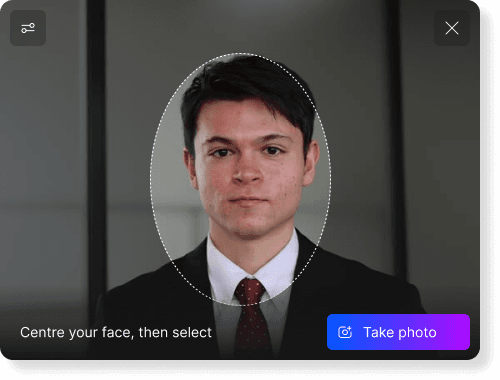
Combine participant instructions, identity checks and equipment readiness. Define when a session can start and who resolves exceptions.
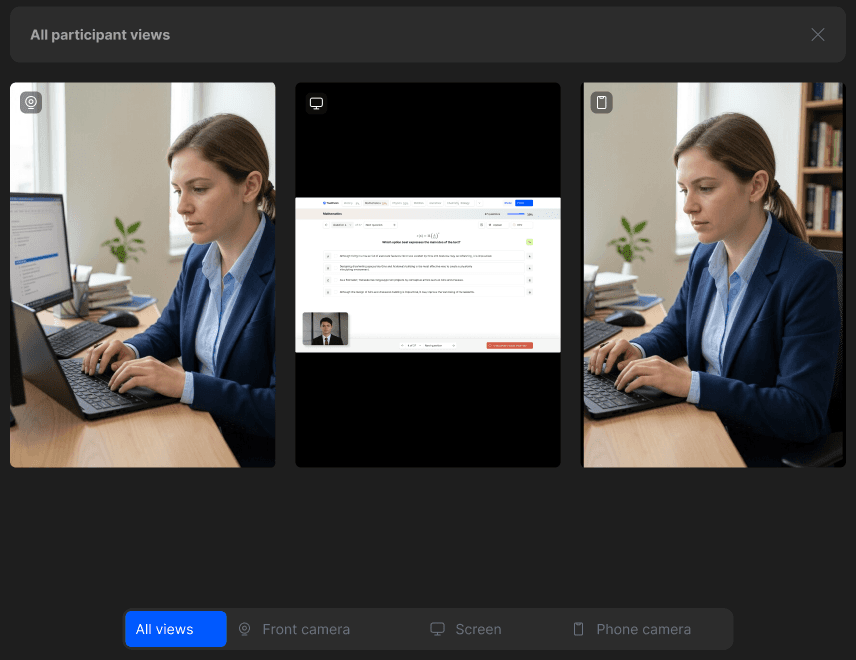
Scope device checks, software controls, ContentProtect and camera coverage around the testing location. Validate the setup on representative workstations.
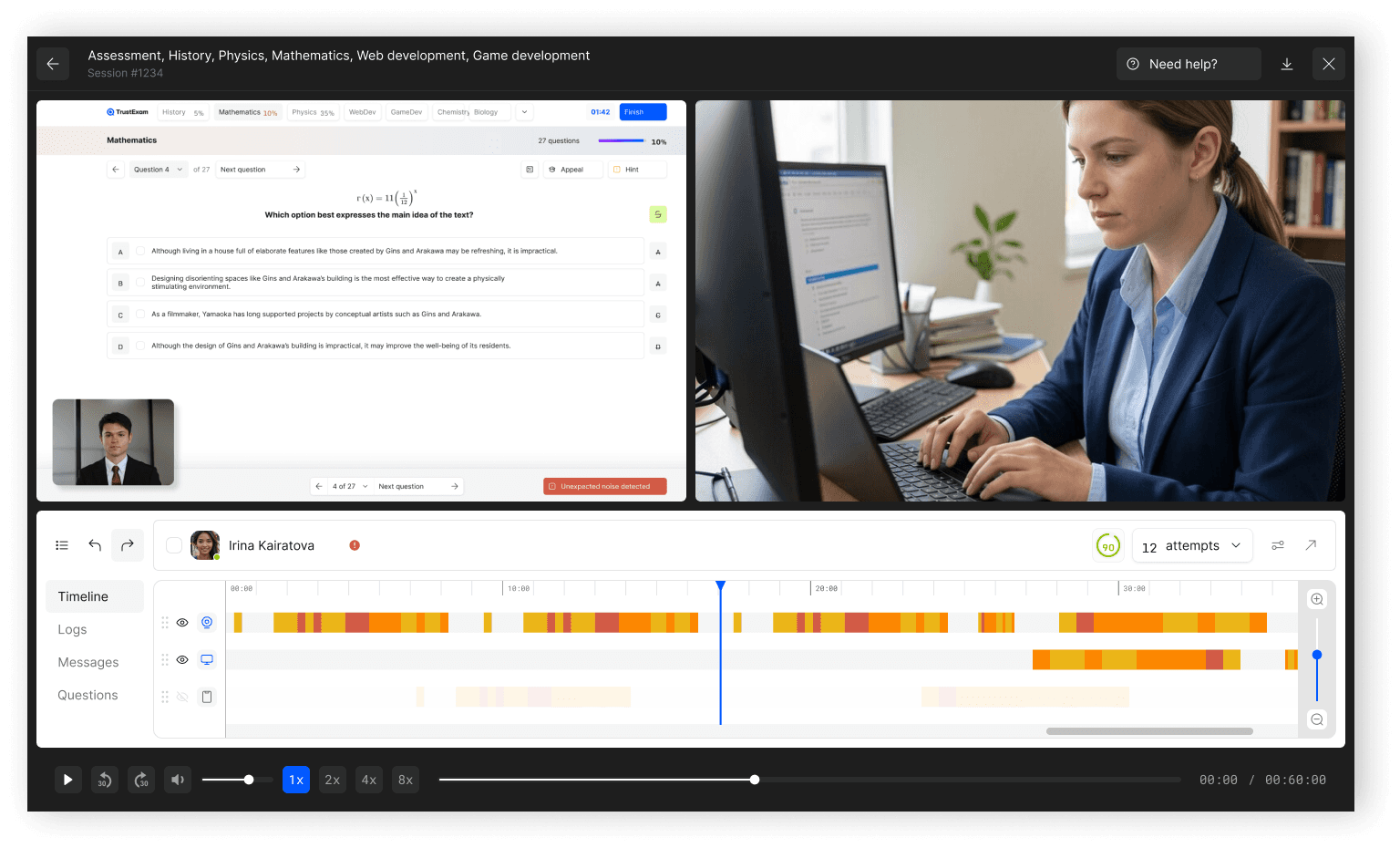
Review recordings and event context against the programme’s rules. Separate technical incidents, permitted behaviour and suspected violations before deciding.
A national programme needs agreed procedures as well as software. Define site readiness, expected peak load, escalation contacts and the human review capacity before rollout.
TrustExam’s driver knowledge-testing case in Kazakhstan brings together identity checks, controlled workstations and session review. Explore the operating context before considering a similar programme.
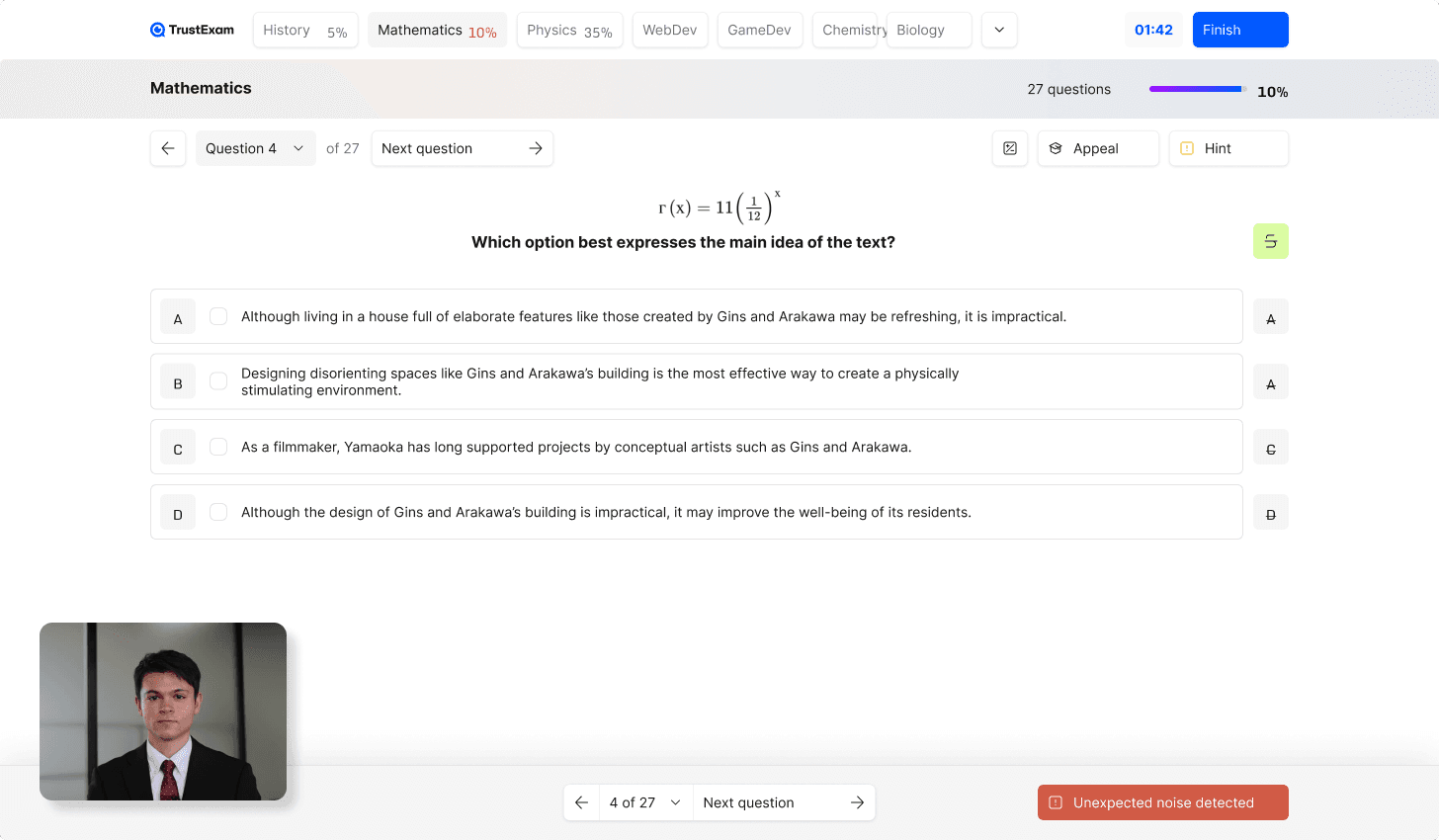
Walk through your format, security requirements and review process.
The programme owner defines the rules. TrustExam supports the configured assessment and review workflow; staffing, capacity and deployment are confirmed for your programme.
Agree the expected outcome, then verify it in a representative workflow for your organisation.
Questions, participant groups, access and instructions aligned with the approved programme.
Answer results and available session events and recordings for authorised review.
Named responsibilities for technical incidents, integrity findings and the final programme decision.
A valid candidate reaches the assigned exam; an identity mismatch follows the agreed exception route.
Test a device or connection interruption and record what the participant and operator should do.
A reviewer can examine the available evidence and distinguish an incident from a confirmed breach.
Compare observed workload, site readiness and review effort with criteria agreed before the pilot.
Explore the details before your demo. If your question is not here, talk it through with our team.
Talk to the teamYes. TrustExam supports testing-centre scenarios. Workstation controls, camera coverage and operating procedures are scoped for the programme.
Capacity must be confirmed for your infrastructure, integration and expected peak. Agree a representative capacity test as part of the pilot.
On-premise deployment can be discussed with the team. Scope the infrastructure, support responsibilities and integration requirements before implementation.
No. A signal is a reason to review the session. The authorised programme owner decides under the applicable exam rules.
Yes, integration is a route to discuss alongside delivery in TrustExam. Confirm which system owns questions, results and candidate records, then validate the actual data exchange in a pilot.
Bring the programme rules, delivery locations, expected concurrency and review responsibilities. We can map the workflow and agree what a pilot must demonstrate.
Book a demoCandidate journey · Environment controls · Evidence review