
Observe
Collect signals from the configured camera, screen and exam-environment checks supported by the selected delivery mode.
AI helps organise signals from an exam session. People assess the context and make decisions under the programme’s rules.
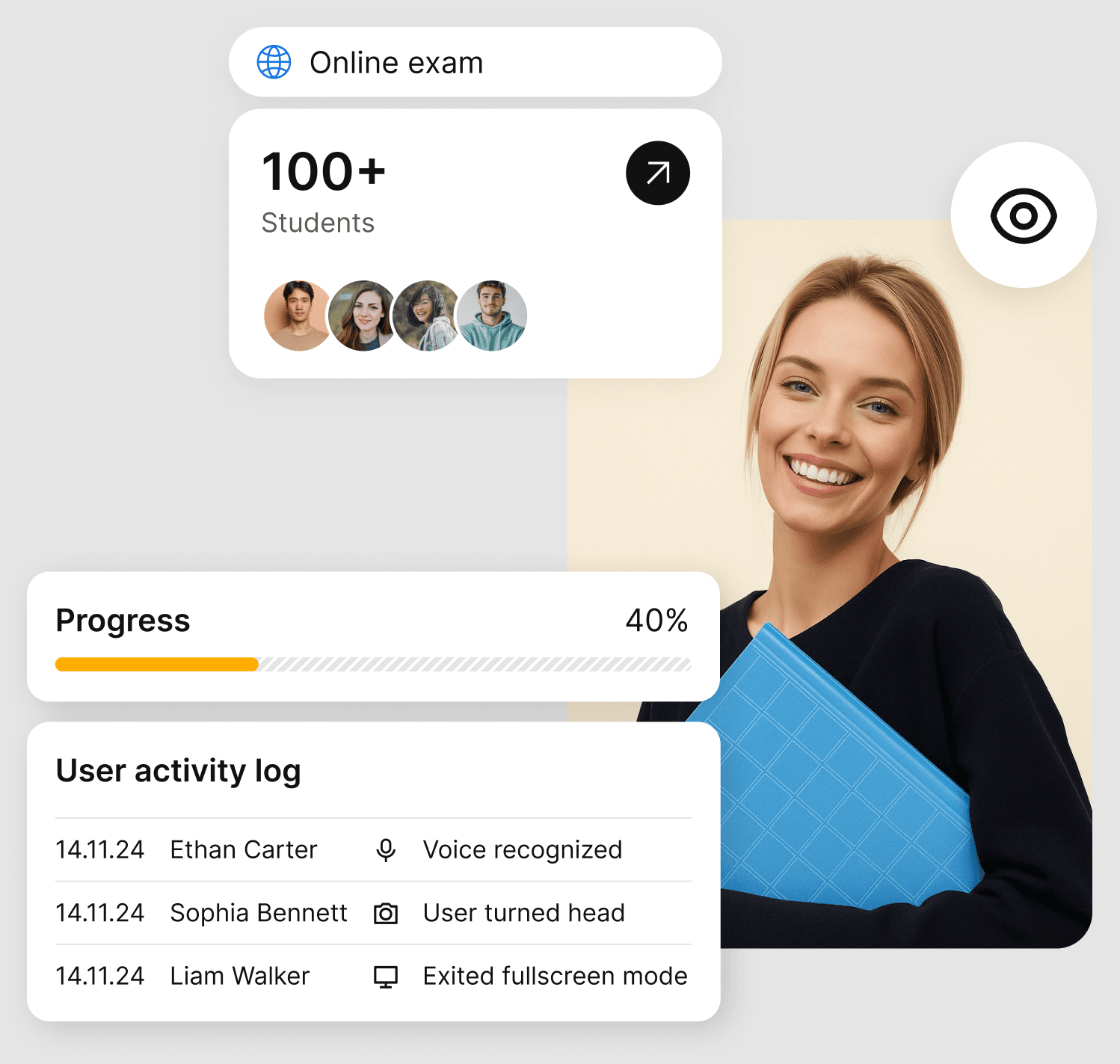
AI proctoring analyses configured session signals and highlights moments for review. Depending on the setup, these can concern participant presence, face or head position, noise and exam-window focus. A signal can have an innocent or technical explanation; it does not establish intent, answer authorship or a rule violation.
Collect signals from the configured camera, screen and exam-environment checks supported by the selected delivery mode.
Help reviewers find events that deserve attention alongside the session context.
Use the programme rules and the available evidence to reach a human decision.
Agree which events matter, how exceptions are handled and who can make a final finding.
Review both useful signals and false alarms using representative devices, participants and exam conditions.
The answer grade measures performance on the tasks. TrustScore and event flags support integrity review. The authorised person applies the programme’s rules to the evidence and makes the final decision.
Explore the details before your demo. If your question is not here, talk it through with our team.
Talk to the teamIt analyses the configured session signals, such as participant presence and exam-window focus. Supported inputs depend on the delivery mode and enabled settings; validate them with representative sessions.
No. Recorded or asynchronous review describes when a person examines session evidence. AI describes how some signals are analysed. Automated flags may support review during or after an exam.