
Admission
Connect candidate identity to the assigned exam and document exception handling.
Design an operating model for licensing and public-sector exams: admission, session monitoring, evidence review and escalation.
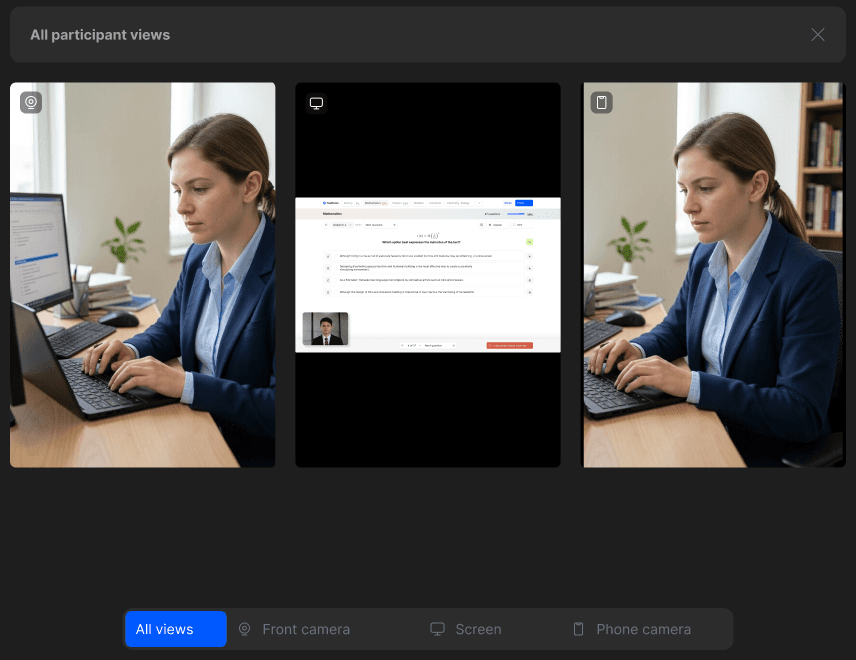
Set responsibilities before rollout. Exam-centre staff, central reviewers and programme owners need a shared understanding of the rules and of how technical incidents differ from integrity concerns.
Connect candidate identity to the assigned exam and document exception handling.
Check the site environment and agree the response to device or connection problems.
Give authorised reviewers the session context needed to apply the programme rules.
The owner approves questions, scoring, participants, dates and attempts. The delivery team translates the rules into access, identity and monitoring settings.
Centre staff or the remote support team check the joining path and permitted equipment. Define what to do if participant details do not match or a device check fails.
Agree who may pause or intervene in the process and how technical problems reach the right team. A connection interruption must not be treated automatically as cheating.
Reviewers examine the available records and apply the programme rules. Confirm the result handover, authorised decision-maker and appeal route with the programme owner.
Agree the expected outcome, then verify it in a representative workflow for your organisation.
Questions, participant groups, access and instructions aligned with the approved programme.
Answer results and available session events and recordings for authorised review.
Named responsibilities for technical incidents, integrity findings and the final programme decision.
A valid candidate reaches the assigned exam; an identity mismatch follows the agreed exception route.
Test a device or connection interruption and record what the participant and operator should do.
A reviewer can examine the available evidence and distinguish an incident from a confirmed breach.
Compare observed workload, site readiness and review effort with criteria agreed before the pilot.
Explore the details before your demo. If your question is not here, talk it through with our team.
Talk to the teamThis is a delivery model to define with the programme owner. Agree access, local intervention and central review responsibilities, then validate the complete handover in the pilot.
An authorised person applies the programme rules after reviewing the available context. An automatic signal is not proof of a breach and does not itself decide licensing or qualification.
Agree acceptance criteria in advance for candidate access, equipment, incident handling, reviewer access and result handover. Capacity and staff effort should be measured under representative conditions.
Bring admission rules, review roles and incident procedures to scope the first representative pilot.
Request a demo