
Certification bodies
Connect the candidate, the assigned exam and the review process so the result can be considered against your certification rules.
Support professional certification, licensing assessments and renewal exams with controlled access, suitable questions and reviewable session evidence. Your organisation defines competence requirements and decides whether to award the credential.

Dunk & Associates / Systems 24-7 uses TrustExam in live exams. Our collaboration focuses on digitising and securing food handler certification in Canada.
Bring a sample exam, expected candidate volume, retake rules and review requirements. We can agree the configuration, reviewer responsibilities and pilot acceptance criteria.
Connect the candidate, the assigned exam and the review process so the result can be considered against your certification rules.
Assess the knowledge expected of members or specialists. Use subject experts for question quality and written-answer grading.
Prepare the relevant exam version, participant group and attempt rules for each renewal cycle. The awarding body decides what renewal requires.
Use the agreed controls at each stage of the certification exam.
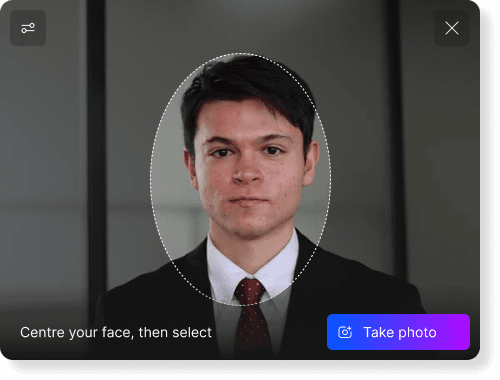
Define identity requirements, equipment checks and permitted exceptions before candidates arrive. Give candidates a way to prepare and ask for help.
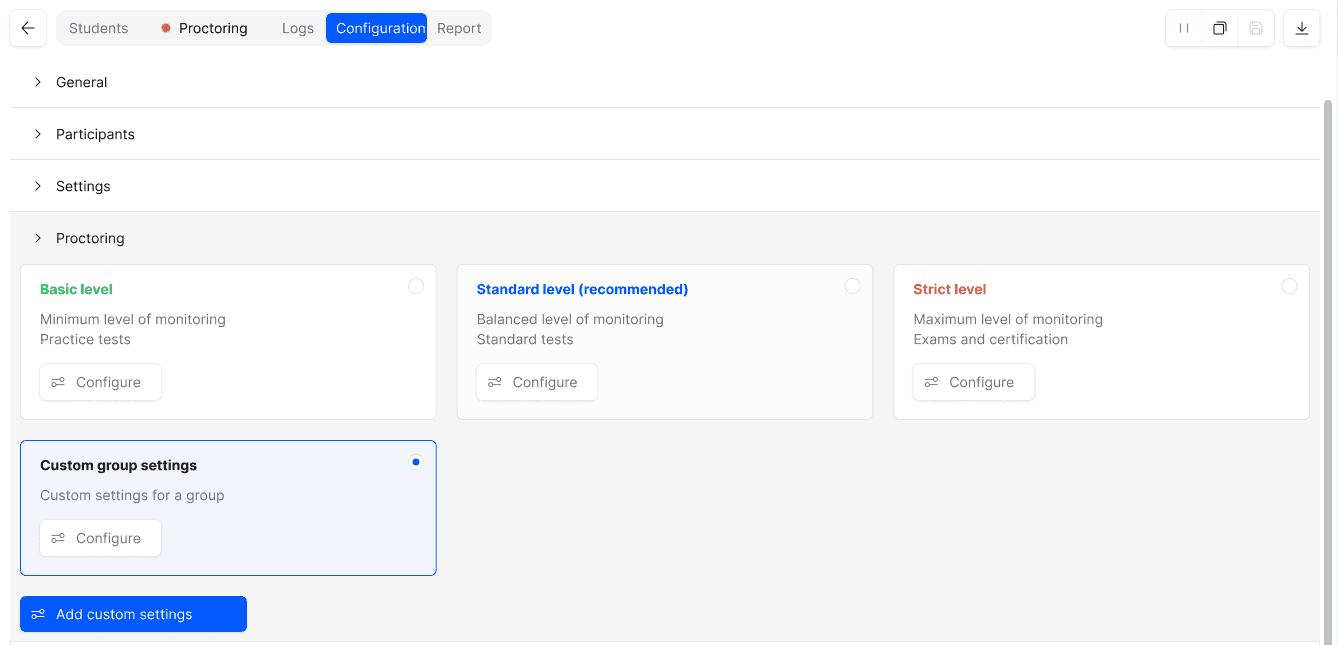
Configure ContentProtect, environment checks and camera coverage around your delivery model. Test the setup against permitted tools and assessment requirements.
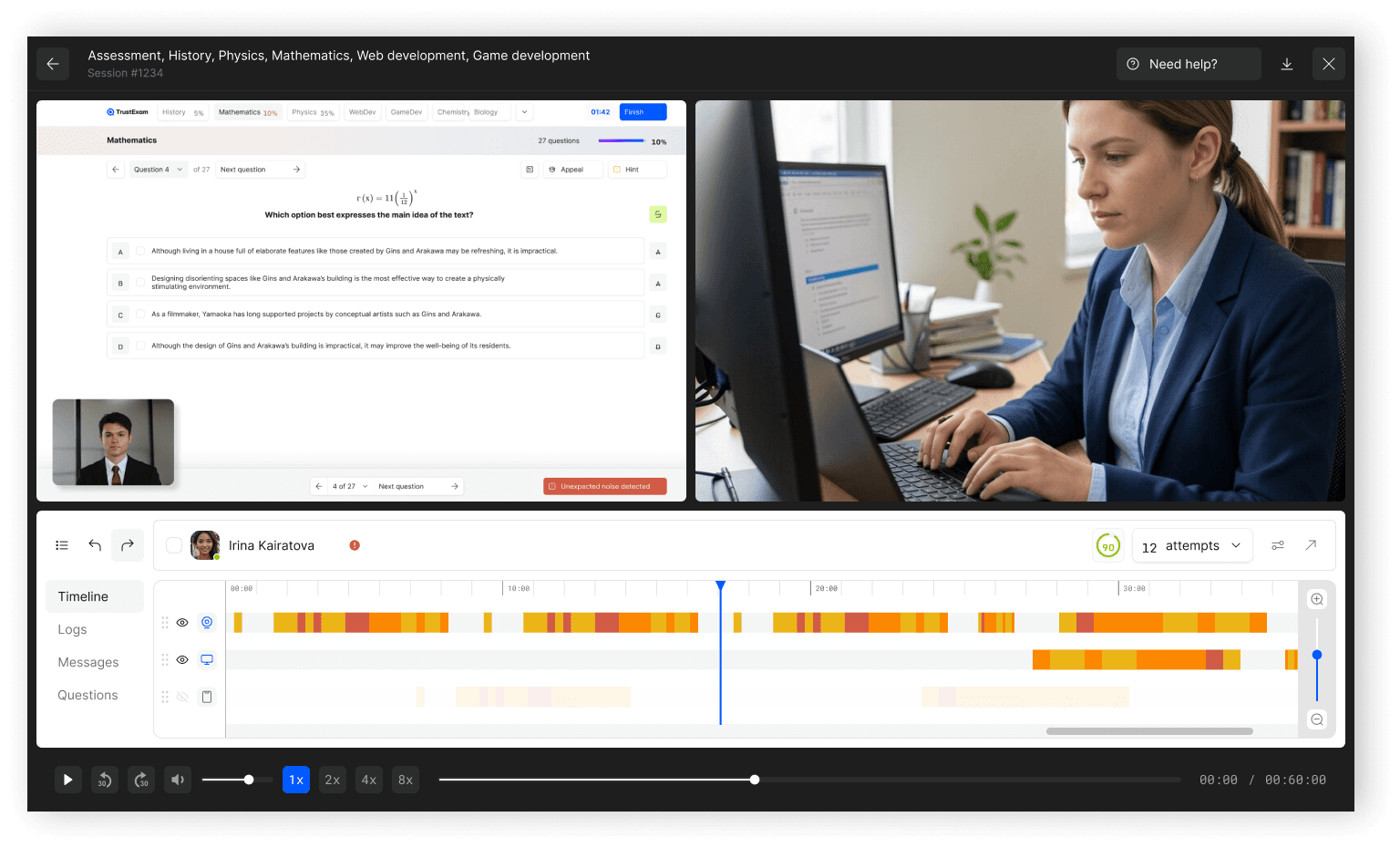
Read TrustScore and the integrity report alongside session evidence. Decide whether an event violates your rules before it affects a qualification outcome.
Bring together the knowledge assessment and session review so the awarding body can apply its qualification requirements.
An event alone may not explain what happened. Review the surrounding recording, technical context and any approved exceptions before applying the programme’s rules.
Use content controls alongside monitoring and candidate rules. Software controls have boundaries, so plan for external devices and the physical exam setting too.

Walk through your format, security requirements and review process.
Exam integrity evidence supports your process; it does not replace the awarding body’s judgement.
Agree the expected outcome, then verify it in a representative workflow for your organisation.
Question coverage, marking, permitted resources and attempt conditions aligned with the programme.
Available answers, events and recordings for the designated marking and integrity reviewers.
The credential decision remains with the authorised organisation, including any practical assessment outside the exam.
Check topic coverage, question quality and sample marking with subject experts.
Test the configured attempt rules and confirm how exam materials are protected between sittings.
Make sure an authorised reviewer can reach the relevant evidence and apply the programme rules.
Agree the actual result format, recipients and appeal route with the awarding body.
Explore the details before your demo. If your question is not here, talk it through with our team.
Talk to the teamNo. TrustScore supports integrity review. The awarding organisation makes the certification decision under its own rules.
Both delivery scenarios can be scoped. The candidate checks, equipment and monitoring configuration should be confirmed for each setting.
Your programme defines the appeal process. Reviewers can use available session evidence alongside the candidate’s explanation and the exam rules.
No software can guarantee that. Combine technical controls with the physical environment, participant rules and incident review.
The authorised awarding body defines the qualification and issuance rules. Using TrustExam does not confer accreditation. Confirm the technical process for producing and verifying the document; an exam score or TrustScore alone does not award a credential.
Agree the required assessment information, review conclusion and authorised recipients. Test the actual export or integration before launch. Include your procedure for communicating disputed or incomplete results.
Bring the exam specification, marking scheme, retake rules and review responsibilities. We can demonstrate the assessment journey and identify the pilot acceptance criteria.
Request a demoCandidate journey · Environment controls · Evidence review