Blog
Insights
Kazakhstan Transforms Driver Testing to Combat Nationwide Cheating Crisis
The State Corporation "Government for citizens" partnered with TrustExam to build one of the world's most secure digital testing systems, conducting over 1.2 million exams and restoring integrity to driver licensing.
Nurali Sarbakysh
CEO

The State Corporation "Government for citizens" partnered with TrustExam to build one of the world's most secure digital testing systems, conducting over 1.2 million exams and restoring integrity to driver licensing.
How Kazakhstan Built a World-Class Secure Testing System
Kazakhstan's government faced a critical challenge: widespread cheating in driver's license testing threatened road safety and public trust. Through a strategic partnership with TrustExam, a homegrown AI-proctoring platform, the State Corporation transformed the nation's testing infrastructure into a model of security and transparency that now serves over one million exam-takers annually.
Background
In Kazakhstan, as in many countries worldwide, the integrity of driver's license testing had been compromised by an increasingly sophisticated cheating industry. Organized groups offered comprehensive "exam assistance" services, from impersonation to remote access manipulation. The underground market flourished with specialized devices: micro-cameras, hidden earpieces, signal transmitters, and other nearly undetectable tools readily available online.
This wasn't merely an administrative inconvenience. Each fraudulent license represented a driver on the road who hadn't demonstrated the knowledge needed to operate a vehicle safely. The implications for public safety were severe, and the erosion of trust in the testing system undermined confidence in government institutions.
Recognizing that traditional security measures couldn't keep pace with evolving cheating methods, Kazakhstan's government decided to approach the problem differently. Rather than incremental improvements, they sought a comprehensive digital transformation that would fundamentally change how driver testing operated across the nation.
The Challenge
The driver's license testing market presented unique security challenges that exceeded those found in educational settings. Behind the cheating epidemic lay a professional ecosystem with substantial financial resources, technical expertise, and constant innovation.
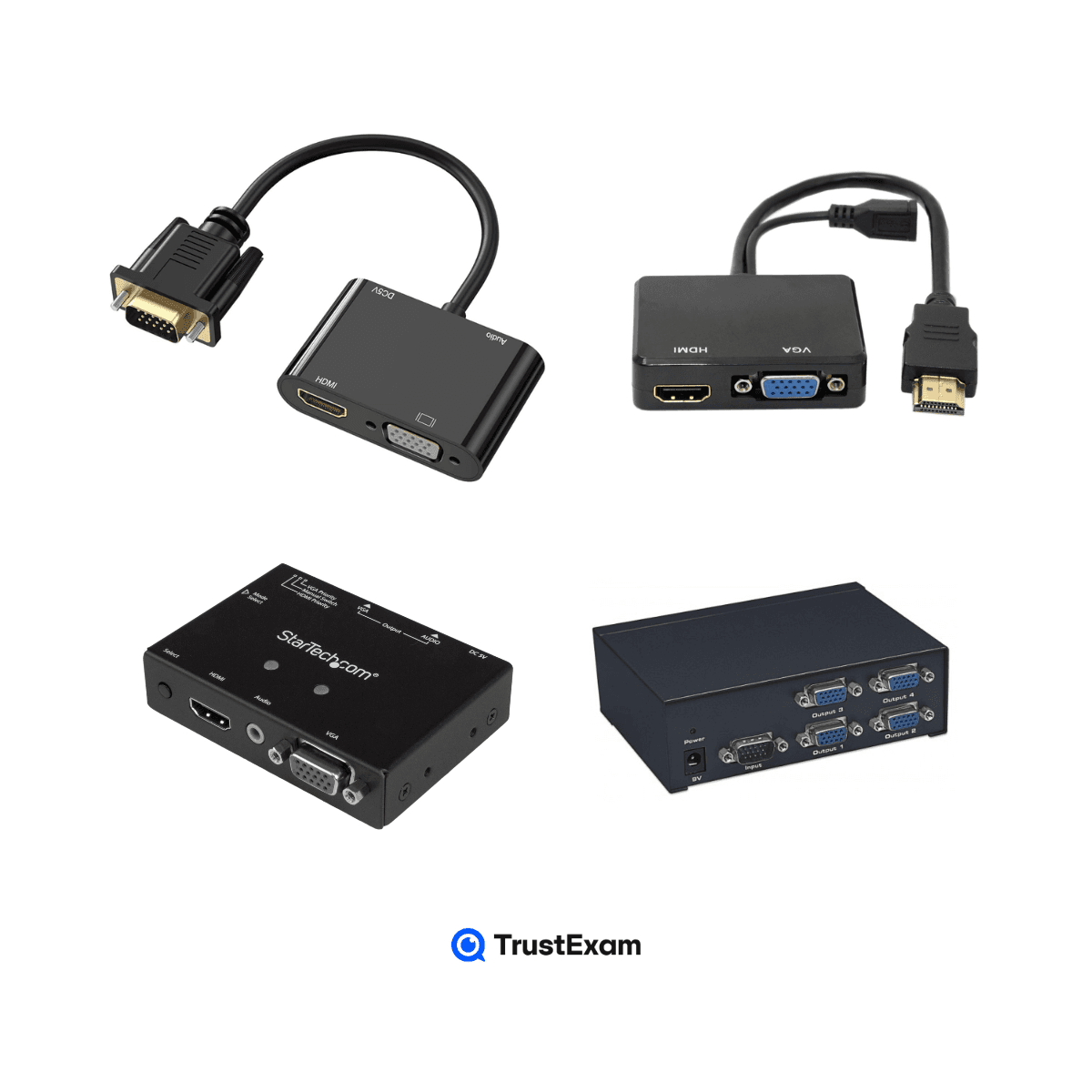
The methods employed were remarkably sophisticated. Man-in-the-middle attacks intercept data transmissions. Hardware modifications included cameras hidden inside keyboards and HDMI splitters that bypassed digital detection. Wearable technology ranged from "smart" clothing with built-in transmitters to vibration signals delivered through shoes. Each time authorities closed one vulnerability, new approaches emerged.
Beyond the technical challenge was the cultural dimension. Many test-takers viewed cheating as an acceptable shortcut rather than a serious ethical breach. The prevalence of cheating services had normalized the practice, creating a cycle where honest preparation seemed unnecessarily difficult compared to simply purchasing assistance.
The scale of the problem demanded more than isolated fixes. Kazakhstan needed a comprehensive solution that could secure testing centers nationwide, integrate with existing government systems, provide real-time monitoring capabilities, and adapt continuously to emerging threats. Most critically, any solution needed to restore public confidence in the legitimacy of driver licensing.
Partnership Strategy
In a decision that demonstrated forward-thinking governance, the State Corporation launched a national hackathon to identify the best technology solution for reforming theoretical driver's license testing. This approach signaled a willingness to engage the local tech ecosystem and trust startups to help solve pressing national challenges.
TrustExam, a Kazakhstani company specializing in online proctoring and assessment technology, entered the competition. Founded in 2018 as early pioneers in remote education and knowledge assessment, TrustExam has built substantial expertise during the pandemic years. Their experience implementing proctoring systems across universities, schools, and large-scale online competitions had taught them how to scale exams effectively, design robust assessment methodologies, and build infrastructure capable of handling massive video-streaming loads under pressure.
TrustExam's technical vision and proven track record convinced government evaluators. After winning the hackathon, the team faced months of intensive integration work with state databases and existing infrastructure. The goal was clear: create a unified national testing platform that could launch across all testing centers simultaneously while maintaining absolute security and reliability.
The partnership required rebuilding significant portions of the proctoring system from the ground up. Key requirements included:
Develop a centralized monitoring system that allows the central authority to oversee every testing center in real time across the country
Integrate biometric identification connected to Kazakhstan's national ID system to prevent impersonation
Implement hardware-level security to block external monitors, unauthorized devices, and data interception attempts
Create comprehensive user-activity analytics to identify suspicious behavior patterns and emerging cheating methods
Build adaptive defenses capable of responding to new threats as they emerge
In October 2023, the full transition to the new platform went live, marking a milestone in Kazakhstan's digital transformation of government testing processes.
Outcome
Nearly two years after TrustExam became the official operator of Kazakhstan's driver's license testing system, the platform has administered over 1.2 million exams across the nation. The transformation extends far beyond the impressive scale of implementation.
As a result, the overall pass rate for the theoretical exam dropped nearly threefold after the introduction of the new system (Source: Tengrinews/).
The security architecture has proven remarkably resilient. Each new cheating attempt, and there have been many, has served as a real-world stress test, revealing edge cases and vulnerabilities that informed continuous system improvements. TrustExam's adaptive approach means that discovered loopholes are rapidly closed, making the entry barrier for successful cheating increasingly unreachable.
Perhaps the most telling indicator of success is the shift in test-taker behavior. Overall pass rates and attendance figures initially dropped, not because the examination became more difficult, but because candidates began approaching it differently. Without reliable cheating options, test-takers started preparing seriously for the exam. The assessment evolved from a challenge to outsmart into what it was designed to be: a legitimate evaluation of driving knowledge and road safety understanding.
For the State Corporation and the Kazakhstani public, the new system has restored integrity to a critical public safety function. Every driver's license now represents verified knowledge rather than purchased credentials. The transparency of the testing process, with real-time monitoring and biometric verification, has rebuilt public confidence in the licensing system.
The technical achievement has positioned Kazakhstan as an international leader in secure digital assessment. The case represents one of the first large-scale, government-backed implementations worldwide to address testing fraud systematically rather than reactively. The success has attracted interest from other countries and industries seeking to implement similar security frameworks.
The reform’s impact extended far beyond cheating detection.
According to the State Corporation, the total number of driver’s licenses issued in Kazakhstan fell by nearly half after the transition to the new proctoring-based testing system.
In 2023, before the reform, the country issued approximately 1.1 million driver’s licenses.
In 2024, following the implementation of TrustExam and the new security protocols, that number dropped to around 620 thousand (Source: Annual Report of the Non-Commercial Joint-Stock Company “State Corporation ‘Government for Citizens’” for the Year 2024).
This sharp decline reflects a structural change rather than reduced demand. With fraudulent attempts now routinely detected and biometric verification required for every test-taker, only legitimately qualified candidates advance through the process.
The result: fewer but more authentic licenses, restored integrity in driver qualification, and growing public confidence that every issued document now truly represents proven driving knowledge and competency.
Beyond metrics and technology, the partnership created an ecosystem where cheating became socially and economically pointless rather than technically impossible. This cultural shift, where candidates choose legitimate preparation over fraudulent shortcuts, represents the deepest measure of the transformation's success.
The driver's license testing platform continues to evolve, with ongoing enhancements addressing emerging challenges and expanding capabilities. For Kazakhstan, the system has proven that technology can do more than automate processes; it can restore trust in government services where integrity matters most.
Nurali Sarbakysh
CEO
Share