Блог
Инсайты
Bluetooth-сканер в прокторинге: как обнаружить скрытые устройства для мошенничества
Узнайте, как Bluetooth-сканер TrustExam.ai обнаруживает скрытые беспроводные наушники и смарт-часы во время экзаменов с точностью 97%. Обеспечьте целостность тестирования в 2026 году.
Нурали Сарбакиш
Генеральный директор
В 2026 году ландшафт академической честности достиг критической точки. Поскольку генеративный ИИ внедряется в каждую операционную систему, методы обхода экзаменационной безопасности эволюционировали от простых программных трюков до сложных аппаратных вмешательств. В то время как устаревшие системы контроля продолжают сосредотачиваться на блокировке браузеров и мониторинге веб-камер, возникла новая "слепая зона": использование микро-беспроводных устройств, которые функционируют полностью вне внутренней среды компьютера.
Чтобы справиться с этой проблемой, TrustExam.ai — основанный на базе более 4 миллионов экзаменов и более 6 лет опыта — представил Bluetooth-сканер. Эта технология предоставляет проактивный слой мониторинга окружающей среды, предназначенный для обнаружения активных беспроводных сигналов в непосредственной близости от участника теста, обеспечивая справедливую и заслуживающую доверия тестовую среду для всех.
Эпидемия аппаратного мошенничества 2026 года
Традиционные методы контроля были разработаны для эпохи, когда мошенничество означало открытие скрытой вкладки или просмотр физической шпаргалки. Сегодня студенты имеют доступ к целому рынку "невидимых" аппаратов:
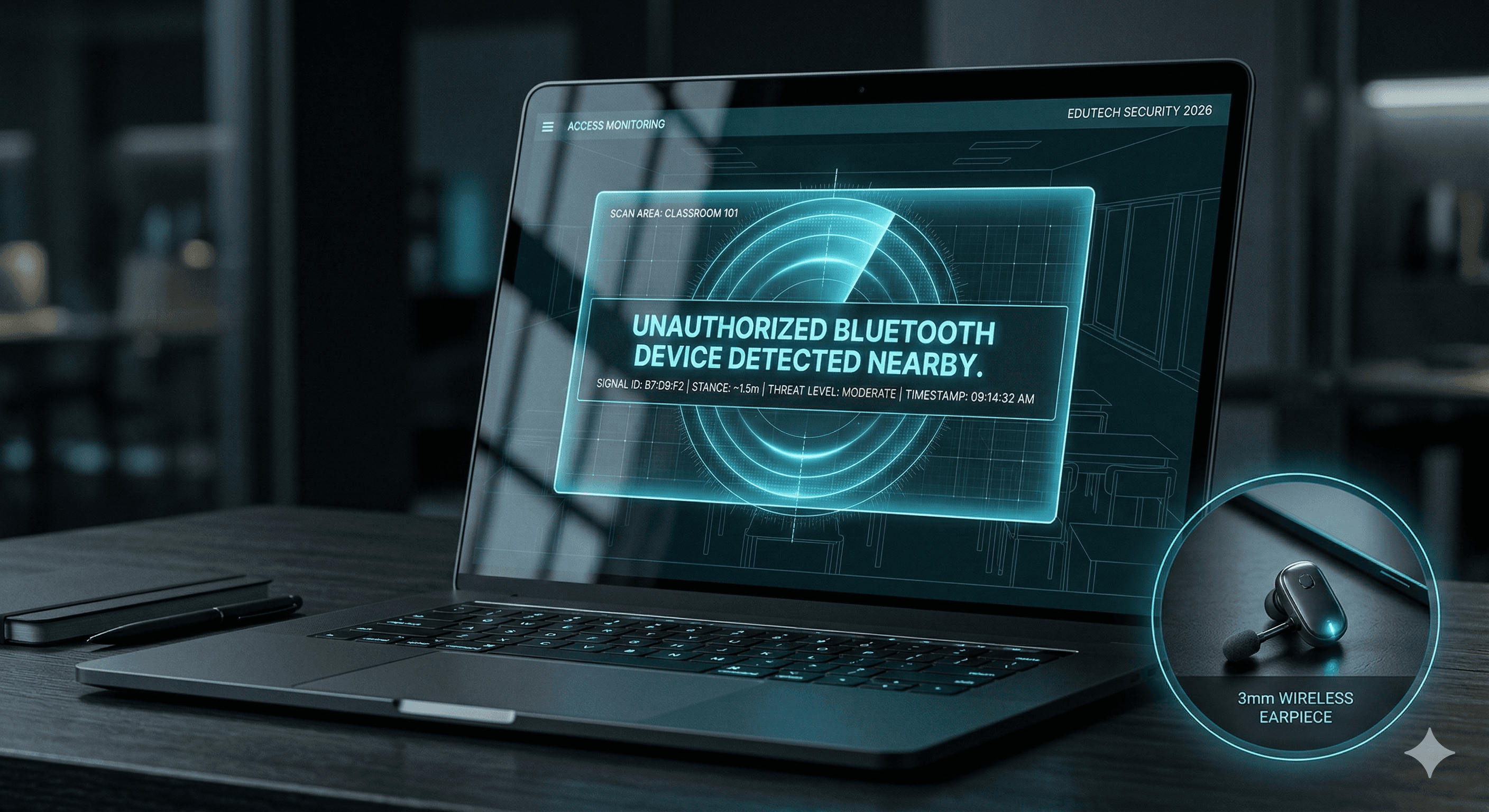
Микро-наушники: Устройства размером всего 3 мм (меньше, чем зерно) которые располагаются глубоко в слуховом канале, недоступные для стандартных веб-камер.
Умные часы на базе ИИ: Носимые устройства, которые могут получать текстовые подсказки в реальном времени или голосовые ответы без участия студента в наборе текста.
Скрытые внешние коммуникаторы: Смартфоны или планшеты, скрытые в рюкзаках или под столами, которые соединяются с наушниками и предоставляют живую аудиотрансляцию ответов.
Поскольку эти устройства не подключаются к экзаменационному ПК, они не отображаются в диспетчерах задач или журналах браузеров. Устаревшие системы контроля, которые мониторят только "программное состояние" компьютера, по сути, слепы к этому аппаратному мошенничеству.
Как работает Bluetooth-сканер: технический анализ
Bluetooth-сканер TrustExam.ai действует как радиочастотный (RF) страж. Он не мониторит экран студента; он отслеживает радиочастотное окружение, окружающее студента.
1. Наблюдение за спектром
Во время экзамена приложение TrustExam.ai периодически активирует пассивный режим наблюдения за местным Bluetooth-спектром. Оно идентифицирует все активные сигналы в пределах диапазона, не требуя физического подключения к этим устройствам.
2. Анализ силы сигнала (RSSI)
Интеллект системы заключается в использовании метрик Индикатора силы полученного сигнала (RSSI). Просто обнаружить сигнал недостаточно — в современном доме или студенческом общежитии может быть десятки Bluetooth-устройств в соседних комнатах. TrustExam.ai анализирует уровень сигнала в децибелах:
Слабые сигналы: Классифицируются как фоновый шум (устройства в других комнатах или на других этажах).
Сильные сигналы: Если RSSI превышает определенный порог, система считает устройство находящимся в пределах "досягаемости" студента.
3. Реакция в реальном времени
Если обнаружен активный сигнал высокой силы, система немедленно приостанавливает экзамен. Интерфейс отображает четкое предупреждение: "Обнаружено беспроводное устройство Bluetooth поблизости. Отключите его, чтобы продолжить экзамен". Студент должен отключить устройство или удалить его с рабочего места перед тем, как агент контроля разрешит возобновить сессию.
Bluetooth-сканер против устаревших методов "блокировки"
Функция | Устаревшие браузеры блокировки | Bluetooth-сканер TrustExam.ai |
Метод обнаружения | Мониторит внутренние процессы ПК | Мониторит внешнюю RF-среду |
Обнаружение микро-наушников | Нет (если не подключены к ПК) | 97% вероятность обнаружения |
Блокировка смарт-часов | Может блокировать только уведомления ПК | Обнаруживает активный сигнал сопряжения |
Использование внешнего телефона | Не обнаруживает близлежащие устройства | Идентифицирует сигналы в пределах досягаемости |
Объединяя этот RF-мониторинг с нашим AI-поведенческим контролем — который отслеживает более 40 категорий подозрительного поведения в реальном времени — TrustExam.ai закрывает пробел, который аппаратные производители эксплуатировали на протяжении многих лет.
Кейс: Обеспечение честности на национальном уровне
Эффективность обнаружения аппаратных средств TrustExam.ai не является теоретической. В нашей реализации программы Национального водительского удостоверения мы провели более 1.3 миллиона тестов с октября 2023 года.
В условиях сертификации с высокими ставками, где "сети подмены" часто обеспечивают кандидатов скрытыми наушниками, TrustExam.ai достигла 100% уровня предотвращения попыток подмены и полностью заблокировала несанкционированный удаленный доступ. Этот уровень безопасности помог правительству раскрыть коррумпированные схемы на сумму более $500,000 USD.
Конфиденциальность и соблюдение норм: стандарты GDPR и FERPA
По мере продвижения к 2026 году ожидания в отношении конфиденциальности становятся строже, чем когда-либо. Многие учреждения опасаются технологий, которые "сканируют" окружающую среду. Критически важно определить, что Bluetooth-сканер TrustExam.ai не делает:
Нет доступа к данным: Сканер никогда не подключается к телефону или часам студента. У него нет доступа к личным файлам, фотографиям или сообщениям.
Нет удаленного управления: Система не может отключить устройства студента; она просто уведомляет студента о том, что их необходимо отключить вручную.
Шифрование без знания: Все журналы сессий и метаданные защищены шифрованием корпоративного уровня и хранятся в дата-центрах, соответствующих местным законам.
Наша философия — "Конфиденциальность по дизайну". Мы гарантируем, что честность не достигается ценой достоинства студента или безопасности данных.
Часто задаваемые вопросы (FAQ)
Как контроль обнаруживает Bluetooth-наушники?
В 2026 году современные системы, такие как TrustExam.ai, используют Bluetooth-сканеры, которые мониторят радиочастотную среду. Анализируя Силу сигнала (RSSI), система может определить активные наушники в непосредственной рабочей зоне студента, даже если они меньше 3 мм.
Может ли студент использовать смарт-часы во время онлайн-экзамена?
Большинство кодексов академической честности строго запрещают смарт-часы. TrustExam.ai определяет активное Bluetooth-сопряжение между часами и ближайшим телефоном, вызывая немедленное предупреждение, требующее отключения устройства перед продолжением экзамена.
Сканер Bluetooth читает мои личные сообщения?
Нет. Сканер TrustExam.ai — это пассивный слушатель сигналов; он не "сопрягается" и не "согласовывает" с вашими устройствами. Он не может получить доступ, прочитать или сохранить любой личный контент с вашего мобильного телефона или носимых устройств.
Что произойдет, если система обнаружит Bluetooth сигнал от соседа?
TrustExam.ai использует фильтрацию силы сигнала. Если обнаружен Bluetooth сигнал соседа, низкое значение RSSI позволяет ИИ классифицировать его как "шум вне досягаемости", предотвращая ложные срабатывания и ненужные прерывания.
Нурали Сарбакиш
Генеральный директор
Поделиться